

By Jude L. Fernando –

Jude L. Fernando
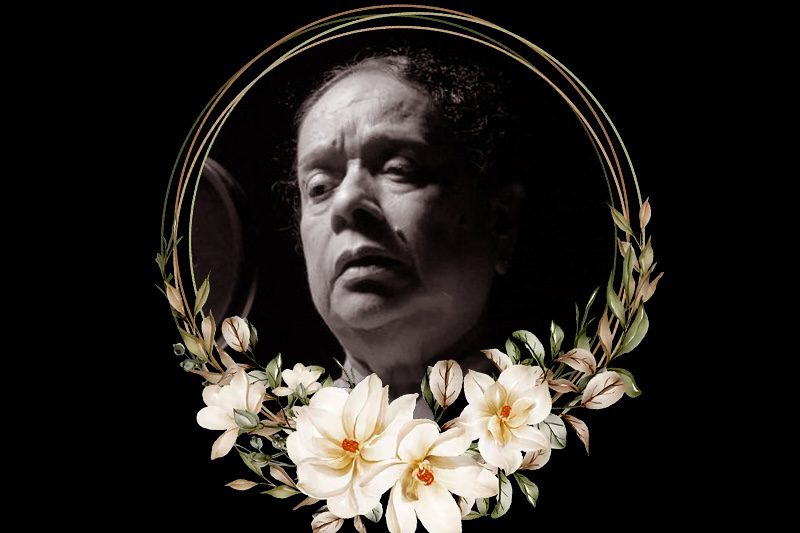
Dr. Nanda Malini‘s critics turned on her before her death—and haven’t stopped since. They think they’re burying her legacy; instead, they’re digging their own graves in public, mistaking noise for argument. Their assault has misfired at every turn, hardening the very reverence they hoped to erode. Call it fabrication dressed as analysis by people who cannot read the social and political weight of her music. Beneath it runs something larger: a ruling class discovering history no longer takes orders, and every stone thrown at her boomerangs back on the thrower. They got the opposite of what they wanted: an immortal witness who spoke for the voiceless when speaking was dangerous, and silence bought safety. Their haste puts their ignorance, narcissism, and moral bankruptcy on display.
This same haste was already visible weeks before her death on July 19, 2026, at eighty-four, when the campaign was already running: recast the songs, turn testimony against torture houses and disappearance into incitement. Her death changed nothing. It didn’t sour into grief—it kept going, absorbing her funeral as one more occasion to repeat the same line. Nobody reckoned with history. Somebody manufactured it, building a usable past and dressing it as memory. The verdict was written while she was still alive to complicate it.
Strip away the noise and the target sharpens: not 1971, not the disappearances of the late 1980s, not Batalanda torture house, not the bodies pulled from rivers, not the mass graves, not the gutted judiciary or strangled democratic freedoms, not the racial and economic deprivations, not the paramilitaries unleashed—and not anything Malini’s songs actually said. The target is control of the record—not what happened, but what a specific class can afford to let people remember to serve their interests in the present. Confusion and ignorance have little to do with it. What’s underway is a project: history constructed, weaponized for a narcissistic political end, aimed less at distorting the past than at burying memory before it hardens into consequence.
Name the critics purpose plainly. This wave has grown alongside the National People’s Power’s rise to government, a party descended from the JVP, the movement whose uprisings Malini’s harshest songs documented. For an establishment that treated governing as inheritance, this isn’t a change of administration. It’s an emergency. Two things fuel the panic: fear that accountability is no longer theoretical, and cultural revulsion—an entitled class forced to watch power sit in hands it never considered fit to hold. Neither is a historical claim. Both are confessions wearing historical costume.
A serious reading of Malini’s catalog would sit inside its moment: what it meant to sing about torture houses while they operated, to give disappearance a melody while people were still vanishing, to name state terror while the terrorizing state owned the airwaves, the courts, and the gun. None of that shows up here. What shows up is a quote stripped of context, guilt by association, four decades of work flattened into a handful of lines, the conditions that produced them scraped away. That isn’t interpretation. It’s the absence of interpretation—ignorance dressed as judgment.
Even when politically expedient to grab power, political parties have never told an honest story about their own violence, and the political class cycling through since 1977 has never forced them to. The pattern is old and mechanical: the state creates violence, crushes the resistance it provokes, then writes history so the resistance—not the violence that caused it—becomes the crime on record. Under threat, the same script runs: the state recasts itself as victim—of youth radicalism, of instability, of a government it fears might open graves it left shut. Watch the sleight of hand: resistance is conflated with violence, so violence—not decades of political failure, plunder, and repression—becomes the explanation for breakdown. The ruling class did not cause the uprising. In this account, the uprising caused itself, and those who built the conditions walk out clean. Acquittal—engineered backward from a verdict already decided.
Malini’s songs sit exactly against this machinery—naming the state as author of violence it tried to pin on its victims, years before that naming had institutional cover. She calls people to resistance, unchained by what the ruler imposes, and to imagine a freer, more just order. Those she inspired did not “go bad” on some sudden turn toward fanaticism; they trained their sight on deprivations built into racialized nationalist politics and the hard discipline of extractive neoliberal economics. What critics call radicalization, she reads as waking up.
And here the education slander shows its hand. The attack tries to make resistance look like a failure of conventional schooling—as if Malini “turned students into radicals” by subtracting from their access to facts and exams. But she insists on Paulo Freire’s distinction between banking education—depositing information for students to repeat—and liberatory education, which treats learning as a practice of consciousness: naming the world so people can change it. Malini does not ask students to trade knowledge for ideology. She asks them to become subjects of learning, reading power for what it is, and organizing accordingly. That is why her songs still sound dangerous to an order that survives by keeping the question unasked.
These attacks expose the moral bankruptcy of their makers, not any flaw in Nanda Malini. They cannot touch her. What they do—against their own intentions—is confirm what they’re trying to deny: that her voice frightened power because it was accurate, and the discomfort it still produces is guilt meeting testimony it cannot silence. The attacks don’t damage her credibility. They build it, drawing a straight line from Malini to everyone who rose up and paid a price for democracy and justice—a line running through the Aragalaya into the political shift the country is living now. Her critics wanted to cut that line. Their attack welded it shut.
This machinery has run before. Pull the Facebook histories of the loudest voices attacking her now and the same pattern surfaces: the same accounts spent 2022 and after manufacturing an equally dishonest account of the Aragalaya—casting a youth uprising against economic collapse as mob violence, scrubbing the state’s hand from the story. Go back further, and the pattern deepens—the same revisionist reflex applied against every popular challenge to power for decades. Not two controversies. One operation, run by one class with a practiced history of rewriting resistance into criminality. The tactic is identical because the fear is identical: a country that no longer accepts the official story, told by people who have never had to answer for writing it.
None of this happens in a vacuum. It is the signature of a single class, unmoored and unable to metabolize a government it never anointed, running the disinformation playbook it has run for years—first on the Aragalaya, now on the woman whose songs helped make the Aragalaya thinkable. Anger did not write this history. Wounded entitlement did—along with a refusal to accept that the country’s story might finally be told by those who suffered through it, not those who administered the suffering.
Understanding Malini requires holding her inside that context. She lived through the struggles of her era, where the risk was real, and spoke when speaking cost something. Her accusers should sit with an inconvenient memory: some of the loudest UNP and SJB voices condemning her today belong to a tradition whose leaders, J.R. Jayewardene and Ranasinghe Premadasa, publicly justified crushing the youth of that generation to hold power. Those same leaders also protested their predecessors’ crushing of youth uprisings and promised justice to overturn incumbents—Premadasa weeping in public over the assassination of Premawathi Manamperi. Malini exposed those contradictions and gave voice to the voiceless. She never apologized. She also refused certain songs the moment she saw they could be scavenged by nationalists who made racial supremacy the load-bearing wall of state legitimacy. Conscience acting in real time.
She was not incidental to what came after. She was a precondition—one of the voices that readied the public mind for a regime change that arrived, eventually, through the Aragalaya. The criticisms leveled at her now are opposition to change dressed as history—not some newfound anxiety about the NPP’s direction.
Say the last part without euphemism: these accusations are landing now because a ruling class that once believed it owned this country by right finds itself scattered, watching its old immunity dissolve—afraid it may finally answer for the violence it built its power on. That fear is what’s talking every time someone attacks Nanda Malini. Her legacy was never on trial. Theirs is.
A Brief Legacy of the Duo
The collaboration between Dr. Nanda Malini and lyricist Prof. Sunil Ariyaratne stands among the most defining partnerships in Sri Lanka’s cultural and political history. Ariyaratne’s poetic brilliance and incisive socio-political commentary met Malini’s expressive vocal range and classical precision. Together, they shaped legendary concert series such as Pavana and Sathyaye Geethaya, wielding music as a weapon against state oppression, violence, and human-rights violations. Their creative bond endured until her passing in August 2026, closing an era of socially conscious art.
Beyond protest anthems, this partnership produced a vast catalog of classical, romantic, and philosophical masterpieces—cultural touchstones such as “Thunhele Kiri Ammawaru” alongside the fiery “Thunhele Kele Thula Singhe Patau.” With rigid artistic integrity, Malini later refused to perform “Singhe Patau” after exclusionary nationalist groups co-opted its original message—lamenting the flight of brave youth from the country. Instead, she turned toward universal human-rights anthems, leaving behind a body of work including “Ammawarune,” “Tharuda Nidana Maha Re,” “Ran Kenden Benda,” “Kurutu Gee Pothe,” and “Budhdhanubawena.” These songs bridged traditional Sri Lankan values with contemporary sensibilities.
Malini’s songs must be read against the social and economic deprivations that shaped their contexts—and in light of how she and Sunil Ariyaratne adjusted their stance once they recognized the songs’ moral limits. They must also be read as a response to songs solicited by J.R. Jayawardene and R. Premadasa from famous Indian and Sri Lankan singers (“Uda Vuna Loke,” “Peradiga Muthu Atayai Me,” “Shrini Vibhushita Lanka Babale,” “Ethin Hadamu Aluth Ratak”) to glorify their respective presidencies and policies. Nanda Malani challenged what their policies produced, and the resistance that followed is now classified simply as violence—a political narrative born of present-day desperation and fear, rather than an engagement with the context that led to violence, which they highlighted, thereby doing a willful injustice to their efforts and to the uninformed public.
Her lifelong commitment to ordinary people culminated in her final public appearances during the 2022 Aragalaya protests. Stepping into the streets, Malini stood shoulder to shoulder with a new generation fighting economic collapse and corruption. Her presence—and the songs that never stopped reaching people—gave the protests a vital soundtrack, cementing her legacy not only as a musical icon but as an enduring, fearless voice of Sri Lanka’s civil resistance, one that ruling regimes are more likely to suppress.
The Threat That Outlived Her
The timing is not incidental. It is the whole story.
The viral criticism now linking Nanda Malini to the era’s violence is not critics settling scores after death; it made her an easy target. It is worse: they moved while she was still alive to be wounded by it, confident a frail woman near the end of her life would not mount a public defense of six decades of work. That calculation betrays the entire enterprise. This was never honest cultural criticism. It was an attempt to get the last word before she could contest it—so that by the time obituaries appeared, the revisionist version would already circulate as settled fact. Grief was not the opportunity. Her vulnerability was.
After she passed, the campaign’s cynicism became impossible to disguise. Instead of discrediting her, the attempt reminded a public that might have let her legacy settle into comfortable nostalgia exactly why her songs had been dangerous: because someone, even as she lay dying, felt the need to neutralize them. You do not mount a pre-emptive character assassination against a folk singer’s decades-old protest songs unless you believe those songs still carry live ammunition. The critics did not diminish Nanda Malini. They confirmed, with their own timing, that she was still a threat worth silencing.
To understand why this legacy still frightens people, go back to what Malini, Sunil Ariyaratne, and Rohana Weerasinghe built between 1987 and 1989. Pavana was not a concert series in any conventional sense. It was an act of theological and political sabotage, conducted in plain sight, using the language the Sri Lankan state had spent decades trying to own.
By the late 1980s, the state had perfected piety as camouflage. Politicians draped themselves in saffron-adjacent legitimacy—public almsgiving, blessings from senior monks, ostentatious displays of Buddhist devotion—while the machinery of counterinsurgency ran on torture, disappearance, and the burning of young bodies on tires. The terror was not hidden so much as unspeakable—a silence enforced by fear and abetted by an establishment, religious and secular alike, with every incentive to look away.
Ariyaratne’s lyrics exposed hypocrisy: “With the Buddha’s name on their lips, they light the pyres of innocent children. With the Dhamma in their speech, they wield the weapons of death.” Nanda Malini’s raw delivery turned sacred text into a fierce indictment, stripping the state’s moral legitimacy through Buddhist critique rather than secular rhetoricAriyaratne’s genius was to refuse the premise that Buddhism belonged to the people committing these acts. Instead of writing secular protest lyrics the state could dismiss as imported Marxist sedition, he went straight into the canon—the Dhammapada, the Sutta Nipata, the Three Refuges—and pointed the state’s borrowed moral vocabulary back at it. Most protest art positions itself against the dominant order’s symbols. Pavana instead said: these symbols were never yours. You have been performing piety while betraying its every principle, and we are going to say so, in your own scripture, set to music you cannot ban without exposing that you fear a Buddhist argument.
When a song invoked the ancient teaching that no one is an outcast by birth, only by deed, and turned it against the political class ordering the deaths of “vasala” youth, it cited the Buddha’s own words as indictment. When another took equanimity and reframed the middle class’s silence as moral cowardice rather than spiritual maturity, it argued that the entire apparatus had gotten its own doctrine wrong, on purpose, for power.
What makes Pavana more than clever theology is that it fused this scriptural argument with an unsentimental reading of Sri Lankan society. It emerged at a moment when suppression of democracy, the accumulation of wealth by a few, and a hardening racist nationalism were entrenching together. The state found it easy to dismiss resistance as foreign contamination—while the Buddhism broadcast by state media had been hollowed into an opiate: be calm, be patient, your suffering is karma, do not agitate. Used separately, both could be neutralized. Together, they could not.
So Ariyaratne translated exploitation into the register of sin. Those growing rich off the liberalized economy while the working poor starved were described as accumulating dark karma, wealth built from drinking the blood of the poor. Structural violence became a violation not of policy, but of cosmic order. The state’s rhetorical escape hatch slammed shut—you can dismiss an agitator with an ideology to sell, but you cannot dismiss a mother, singing in the register of scripture, telling you that your government’s economic violence constitutes a spiritual crime against the Dhamma itself.
Even awareness of one’s place within a system of exploitation was reframed as prajna, spiritual insight. Remaining blind to the machinery grinding down the poor was not naivety but avidya, ignorance in the deepest Buddhist sense. Neutrality itself was indicted as delusion.
The real radicalism of Pavana lies here: not that it was angry, though it was, but that it refused to let anyone, of any station or piety, claim the moral high ground of quietism. No comfortable seat remained in the audience. And none remains today for critics who want to inherit the state’s old quietism and call it responsible commentary.
The Voice That Refused to Apologize for Existing
Part of what made Pavana dangerous was Nanda Malini herself—what she did with a voice expected to behave in narrow ways. The traditional ideal for a Sinhala female vocalist carried an architecture of restraint: softness, higher registers, romantic or domestic subject matter, modesty coded into the act of singing. Malini abandoned this outright. She sang from her chest, in a lower register, with a rawness critics found unsettling precisely because it was not supposed to be available to a woman. It did not sound like performed anguish. It sounded like testimony.
When Pavana addressed the mothers of the disappeared, it gave voice to fury—protective, unyielding, demanding accountability rather than mercy. A small thing to describe, an enormous thing to perform where women were scripted to grieve quietly. By using an unapologetic female voice to indict armed men and their institutions, the trio made an argument about gender parallel to its argument about class: those the state trained everyone to see as passive victims—the poor, the mothers, the young—were instead the moral vanguard, the ones with clarity, the ones the state needed to silence first.
Why the Backlash Proves the Point?
The state’s response was the strongest evidence of Pavana’s power. A government confident in its legitimacy did not need to ban a concert series, mobilize sympathetic clergy for competing ceremonies, or reach for the language of treason against a singer and a lyricist.
State-aligned figures treated Pavana as an existential threat requiring a theological counter-offensive: public condemnations for complicity with violence, economic malaise, allegedly defiling Buddhist teaching, state media editorials recasting the concerts as psychological warfare, and branding the artists deshadrohi—traitors to nation, religion, and race, a label functioning less as insult than as a target.
That reaction tells you Pavana had struck something. You do not organize a theological counter-offensive against harmless entertainment. You mobilize against a threat to legitimacy, and in doing so the state validated the trio’s central accusation: that its religious performance was instrumental, not sincere; that clerical compassion extended to soldiers, not the disappeared; that silence was enforced as virtue because the alternative was reckoning.
The same pattern is visible now. Broadcast bans gave way to opinion columns and social media pile-ons, but the reflex is identical: when cultural memory threatens a class’s legitimacy, it tries to discredit the messenger decades later, once she can no longer answer back.
What Actually Survived
It would be easy to flatten Pavana into hagiography or scandal—flawless heroism, or work that “glorified violence” and bears responsibility for the era’s bloodshed. Both are too simple, and the second depends on erasing the conditions the songs responded to.
Pavana did not manufacture the disappearances, torture, or state terror of the late 1980s. Those were already happening, documented, and largely unaddressed. What Pavana did was refuse to let that reality be processed in silence, refuse to let religious language be monopolized by those committing violence, and refuse to let womanhood, poverty, or piety excuse passivity. The songs did not cause a violence that predated them and was initiated by the state itself.
What survived, on cassette tapes passed hand to hand after broadcasters were ordered to erase it, was more durable than a chart hit: proof that a government’s monopoly on religious legitimacy, media access, and physical force still could not guarantee a monopoly on moral authority. That proof outlived the ban, the government that imposed it, and every attempt since to recast it as the problem rather than the response.
The Complications Deserve Honesty, Not Erasure
None of this requires pretending Nanda Malini was simple. She was a more complicated figure in her final years than either critics or uncritical admirers admit. That tension deserves honest argument, not erasure.
But disagreeing with what an artist said in her eighties does not retroactively excuse what critics now do with the songs of her thirties. There is also something worth noticing in what Malini was willing to do that her current critics are not: revise, honestly and publicly, at cost to herself. When nationalist songs she once sang began curdling into something that fed ethnic division, she stepped back from performing them. She recognized when a song’s public life had drifted from what she meant and withdrew it rather than let it be misused.
That is the opposite of what is happening now. Her body of work is being handled with none of the care she applied to it—pulled apart for isolated lines, stripped of the state violence it responded to, redeployed to serve arguments about “irresponsible youth” and “economic decline” she was not making, and the historical record does not support. She had the integrity to correct herself. Her critics are not correcting a record. They are inventing one, only now, only about her, and only once it became useful.
The Mirror, Not Just the Weapon
There is a temptation, having exposed the dishonesty of Malini’s current critics, to stop there—satisfied the revisionists have been named for what they are: political and economic winners of the post-1977 order, dressed in newfound concern, trying to discredit a government whose legitimacy rests on accountability rather than amnesia. That exposure is necessary. But it would be its own dishonesty to treat it as sufficient, or to grant the present government a permanent exemption from scrutiny. Naming an alibi does not make its target beyond reproach. Collapsing those arguments is exactly the intellectual laziness this essay has criticized in others.
The uprisings Malini sang about, and the terror that provoked them, were not the work of a few bad actors. They were the product of a system that concentrated power, insulated itself from accountability, and treated dissent as an existential threat rather than a signal to answer. That system did not arrive with one government and will not vanish because another has taken office. It is a structural inheritance, and structures do not correct themselves out of gratitude for being correctly diagnosed. Malini did not sing against a party. She sang against a pattern: concentrated power performing legitimacy it had not earned, while those paying the cost disappeared, were tortured, or were dismissed as expendable.
None of this excuses the current criticism as anything but bad-faith revisionism from people who fear accountability, not historians pursuing accuracy. But there is a difference between refusing to let dishonest critics score points off a dead singer, and refusing to hold the living to the standard she set. The first is honesty. The second would be betrayal, committed by people who claim to understand exactly what Pavana meant.
Any government that would learn from Nanda Malini’s legacy must first learn to fear it—not as a weapon aimed by enemies, but as a mirror held up by the conscience she helped forge. Opposition to concentrated, unaccountable power needs no cynical revisionists to invent it. It generates itself from whatever gap opens between legitimacy claimed and legitimacy earned. That gap is measured concretely: whether the disappeared are finally accounted for, whether the Prevention of Terrorism Act is repealed rather than inherited, whether Batalanda and its like are prosecuted rather than filed away as history—thereby honoring the voice of Nanda Malini.
Malini’s critics did not create the dynamic that could turn against this government too—they are only its most visible symptom, for now. The next test, if these questions go unanswered, will need no manufacturing either. It will be proof that the wind is still blowing, and that it has never once checked whose government stood in its path.