

By Asoka S. Seneviratne –

Prof. Asoka.S. Seneviratne
“A nation should not be judged by how it treats its highest citizens, but its lowest ones.” — Nelson Mandela
The article addresses the systemic failures behind the tragic Negombo prison riot, which left 28 dead and over 100 injured. Moving past partisan political blame, it analyzes how massive overcrowding (40,000 inmates crammed into an 11,000-capacity system), deep-seated narcotics networks, and compromised internal administration create a volatile environment. By examining Sri Lanka’s blood-stained history of prison crises from 1983 to the present, the essay calls on the NPP government to execute a real, verifiable “system change.” This system change, no doubt, will provide massive credibility & support for the NPP Government. To achieve this, it demands immediate budgetary transparency regarding infrastructure, a shift toward spatial decentralization, and the urgent appointment of a high-powered Presidential Commission of Inquiry (PCOI) with absolute legislative teeth. Furthermore, the article provides a modernized blueprint for total elimination of contraband by citing proven global security standards—such as Singapore’s millimeter-wave scanning, US cell-phone interception grids, and UK drone-detection arrays—proving that airtight, corruption-free penal security is fully achievable.
The Anatomy of a Recurring Tragedy: The Negombo Crisis
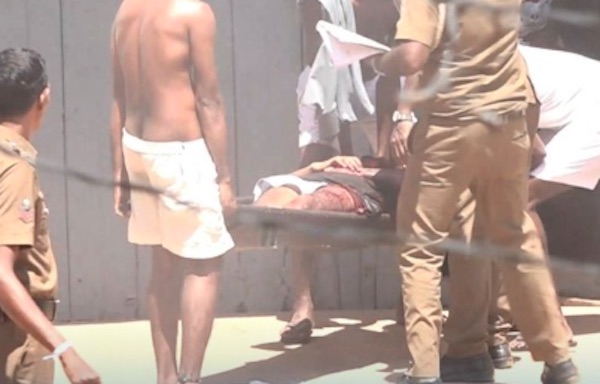
The recent catastrophic violence inside the Negombo prison walls—resulting in the brutal deaths of 28 individuals and leaving more than 100 hospitalized—is not an isolated security lapse. It is the painful symptom of a deeply infected penal architecture. When rival factions clashed within the facility, the subsequent escalation into an all-out riot exposed a terrifying structural truth: our correctional system is a powder keg waiting for a match. The immediate rush by political factions to capitalize on this horror underscores a grim national pattern where human lives are reduced to talking points, rather than catalysts for deep institutional reflection.
Beyond the Body Count: Human Dignity Behind Bars
In the immediate aftermath of such horrors, it is easy for a society to slip into dangerous labels and cold categories. Yet, as the primary reflections on this tragedy remind us, what happened cannot be undone, but how we respond defines our collective morality. Every individual behind bars remains a human being endowed with fundamental rights to safety and dignity. When law enforcement or administrative failures result in indiscriminate danger, the ocean of tears shed by mothers, wives, and children outside the prison gates carries the same weight regardless of the crimes alleged inside. True justice cannot exist where human dignity is completely stripped away at the entrance.
Overcrowding as Systemic Violence: The 40,000 vs. 11,000 Paradox
The math behind Sri Lanka’s prison crisis is as clear as it is damning. With an official design capacity intended for roughly 11,000 inmates, the actual daily occupation numbers hover near an unmanageable 40,000. Operating at nearly 400% capacity transforms correctional facilities from spaces of rehabilitation into pressure cookers of psychological distress and logistical instability. This extreme densification renders basic segregation of inmates impossible, forcing minor offenders, pretrial detainees, and high-risk cartel leaders into the same suffocating corridors. Overcrowding is not just an administrative burden; it is a form of structural violence that actively compromises security.
The Narcotics Nexus: Subverting the Walls from Within
Data indicates that over 60% of the individuals entering the contemporary prison network are held on narcotics-related charges, ranging from low-level possession to high-tier trafficking. Ironically, the very walls meant to isolate the drug trade from society have become compromised by it. The persistence of contraband—from narcotics to smuggled SIM cards and mobile devices—proves that external criminal cartels retain operational capacity inside. The Negombo riot highlights how deeply these rival networks run. Without cutting off the financial and material supply chains that bridge the outside world with cellblocks, internal stability remains an impossibility.
A History Written in Blood: Chronology of Missed Lessons
The cyclical nature of our prison crises reveals a frustrating national habit of historical amnesia. The Negombo tragedy joins a long, blood-stained timeline:
1983 (Welikada Prison): The horrific killing of 53 political detainees during July riots.
2000 (Bindunuwewa): The violent deaths of 27 inmates at a rehabilitation center.
2012 (Welikada): Clashes involving security forces that left 27 dead.
2020 (Mahara): Protests over pandemic conditions culminating in 11 fatalities.
2026 (Negombo): The latest disaster claiming 28 lives.
The recurring question remains: why did we fail to learn from the first, second, or fourth crisis? The lack of historical adaptation forces us to confront an uncomfortable critique—whether our administrative apparatus is simply indifferent to recurring structural failures.
Accountability, Budgetary Transparency, and Underperformance
A critical facet of the crisis rests on the execution of public finances. While successive governments often hide behind the defense of a legacy economic crisis, the public has a right to ask hard questions regarding resource allocations over the last two fiscal cycles. How much capital was specifically assigned to penal capacity expansion? Of that allocation, what percentage was actually spent, and why does infrastructural progress move at a crawl? True accountability demands identifying the precise bottlenecks and holding administrators responsible for chronic underperformance. Blame cannot be passed backward indefinitely; a two-year-old mandate must own its operational realities.
The Mirage of “Investigation Without Action”
Sri Lanka possesses a frustratingly predictable history of appointing high-level bodies merely to defuse immediate public anger and let political storms blow over. Too often, these panels serve as bureaucratic graveyards where hard truths go to be buried under stacks of paper. To shatter this status quo, the government must immediately appoint a high-powered, legally mandated Presidential Commission of Inquiry (PCOI) specifically for the Negombo Prison tragedy.
However, this cannot be just another exercise in optics. The proposed Commission must break the cycle of historic inaction entirely. It must be structured with the executive authority to audit the prison system from “A to Z”—mapping out systemic vulnerabilities, administrative corruption, and security lapses. Its ultimate utility must not be judged by the elegance of its prose, but by the swift enforcement of its short-, medium-, and long-term mandates. Investigating the depths of prison mismanagement is completely meaningless if the final report lacks the legislative teeth, statutory power, or the unyielding executive will required to compel sweeping, permanent systemic changes
Architectural and Spatial Reforms: Decentralizing the Penal System
Many of Sri Lanka’s largest prison compounds occupy ultra-prime, highly dense urban real estate originally selected during the colonial era. Maintaining sprawling, vulnerable infrastructure in crowded city centers creates major security risks and leaves facilities easily accessible to localized smuggling rings. True modernization requires looking to progressive international frameworks, including spatial decentralization. Relocating heavy-containment facilities to isolated, highly secure zones—coupled with open-air agricultural and vocational camps for low-risk inmates—would dramatically ease urban densities while permanently disrupting the traditional “visitor-smuggling” pathways.
Envisioning True Systemic Change: Zero Corruption, Zero Contraband
Under the banner of a promised “system change,” the National People’s Power (NPP) government faces a definitive test within the penal sector. A real systemic shift means establishing an absolute zero-tolerance environment inside facilities. It means neutralizing internal corruption where a minority of compromised officers cooperate with inmates for financial gain. The presence of sophisticated communications tech inside a cell is an administrative failure, plain and simple. Achieving a modernized, clean system requires implementing absolute entry-point screening, signal-jamming grids, and rotating independent guard units to insulate staff from localized illicit networks.
To transform this vision into reality, Sri Lanka must replicate the airtight protocols utilized by high-security facilities worldwide.
Eliminating Human Contraband Smuggling: Following the rigorous models used in New Zealand and Singapore, entry points must feature institutional millimeter-wave body scanners and specialized X-ray systems that eliminate the need for error-prone manual strip searches while detecting hidden drugs, weapons, or micro-SIM cards instantly.
Neutralizing Illicit Communications: In places like South Carolina in the United States, authorities have moved past basic signal jamming—which can sometimes bleed into civilian neighborhoods—by deploying Managed Access Systems (MAS). These systems create a strict electronic umbrella over the prison layout, intercepting unauthorized cell phones and rendering them completely useless while allowing sanctioned emergency communications to function flawlessly.
Securing Airtight Perimeters: Modern facilities in the United Kingdom deploy automated drone-detection radar and radio-frequency (RF) sensors to counter the rising threat of airborne contraband drops, tracking illegal payloads before they can touch a recreation yard.
Eradicating Staff Collusion: True system change also demands institutional self-scrutiny. By enforcing strict “single-point-of-entry” protocols and random, mandatory biometric screenings for all staff and contractors—akin to international aviation security protocols—we can permanently insulate the prison staff from the financial temptation of localized criminal syndicates, ensuring that the interior of our correctional institutions remains completely locked down.
The Path Forward: A Mandate for a Transforming Nation
We stand at a critical crossroads. We can choose to treat the Negombo riot as just another unfortunate news cycle to be forgotten by next month, or we can treat it as the final, absolute boundary of our societal tolerance for institutional negligence. The elimination of these cyclical tragedies requires an uncompromising mix of budgetary commitment, strict transparency, and human empathy. Let this be the last time our state apparatus responds to structural decay with a reactive investigation. Let this moment mark the definitive end of the “sea of tears,” proving once and for all that Sri Lanka is a nation capable of learning, reforming, and honoring human life.
Conclusion
Ultimately, the tragedy at Negombo prison is a stark mirror reflecting the structural limits of our institutional frameworks. True governance is not measured merely by the maintenance of order under ideal conditions, but by the active protection of human dignity and safety within our most vulnerable spaces. For the promised “system change” to resonate as a tangible reality rather than a superficial political slogan, the state must take immediate, absolute accountability for its penal infrastructure. By arming the newly proposed Presidential Commission of Inquiry with executive enforcement power and looking to cutting-edge global technology to secure our facilities, Sri Lanka can finally transition from paper-thin promises to transparent, systemic overhauls. Only then can we ensure that the Negombo crisis is remembered as the historical turning point where the cycle of violence was broken, the influx of narcotics was permanently halted, and the nation’s long sea of tears was finally brought to an end. This system change, no doubt, will provide massive credibility & support for the NPP Government.
*The writer, among many, served as the Special Adviser to the Office of the President of Namibia from 2006 to 2012 and was a Senior Consultant with the UNDP for 20 years, and a Senior Economist with the Central Bank of Sri Lanka (1972-1992). He can be reached at asoka.seneviratne@gmail.com
Ajith / July 10, 2026
“This system change, no doubt, will provide massive credibility & support for the NPP Government.”
This is the first time NPP advisor talking about the need for the “system change” that was suggested by “Aragalaya” movement. This is happening only after the death of people (blood) in the Negombo prison. But the author fail to tell what and how the system change should happen. Further, the blood was shed from the day from 1948. There is nothing to tell what happened and why it happened what are the true causes for a genuine equality. It is one race or one religion can solve the issues. It is power sharing.
/
SJ / July 11, 2026
“Further, the blood was shed from the day from 1948.”
We seem to have missed some blood stains from the pages of history.
Would A please enlighten us on this bloodshed that started in 1948.
(There was serious bloodshed in 1915 which passes notice somehow.)
/
Naman / July 10, 2026
“Active protection of the HUMAN DIGNITY of every one belonging to different linguistic & religious groups is a must for all SL Citizens to live in peace and harmony. If the majority Sinhala Buddhist people had truly practised the Lord Buddha’s TEACHINGS since the independence our country would not be witnessing EVENTS like the Negombo prison unrest that had lead to deaths and injuries to prisoners as as staff who were caring for them. The problem needs to be looked from DIFFERENT ANGLES in order to achieve an IDEAL solution. Speeding up the judicial processes in order to reduce the period the prisoner stays in will bring about the reduction in the numbers of prison inmates. The TRI-FORCES are not only occupying large areas of SL lands but also swallow up of large part of our TAX MONEY. Possibly they could take care of the prisoners that had committed minor crimes and also rehabilitate them as well. Can we know how the Ex-Tigers were rehabilitated by SL Governments???
/
SJ / July 10, 2026
“Demanding True System Change After The Negombo Prison Riot”
So this is admission that the system is very much intact despite the great change that supposedly took place.
/
leelagemalli / July 11, 2026
Hello Prof. Ass,
.
There is a striking contrast between President AKD’s conduct before assuming office and his approach today. Before becoming President, he was outspoken in criticizing state leaders, accusing them of failing to protect the lives of prisoners and citizens during times of unrest.
–
https://www.youtube.com/watch?v=kAHL1yde_gw
–
Yet, following the tragic incident at Negombo Prison, where more than 27 inmates and prison officers reportedly lost their lives and hundreds were injured, the same leader—who also serves as the Minister of Defence—has remained largely silent. Likewise, the Ministry of Justice has yet to provide a clear, credible, and comprehensive account of how such a devastating event unfolded, leaving many unanswered questions and public concern.
The public’s right to information also appears to have weakened, with many feeling that transparency under this government has declined rather than improved. This is particularly disappointing given that the administration came to power promising a “real system change” and presenting itself as the only political force capable of delivering meaningful reform, while dismissing the previous 76 years of governance as a failure. Today, many citizens are disheartened by the tone and conduct of the President and some members of his Cabinet, whose public statements are often viewed as unnecessarily confrontational and lacking the maturity expected of national leaders.
/
Ajith / July 11, 2026
“Let this moment mark the definitive end of the “sea of tears,” proving once and for all that Sri Lanka is a nation capable of learning, reforming, and honoring human life.”
Of course, there were many many opportunities came to end of the “sea of tears” since 1948 by the Sri Lankan rulers and it another opportunity came AKD/NPP. It is no point of discussing who came first which religion came first but we should recognise that something wrong in the system that we developed since 1948 because from the day of Sri lankan rule because there were Sinhalese speaking people, Tamil speaking people. This country was ruled by British from 1800 for more than 150 years, and Other European rulers Portuguese and Dutch from 1500. Within 75 years, We accepted British rule, we accepted bringing Indian Tamils for developing up country but other Tamil speaking people living for long. Most of the Tamil speaking people lived in the North East of Sri lanka. Within 75 years there is no single day without violent which made the rulers to make the collapse of the rule of law, collapse the judiciary, collapse the institutions, collapse the religion, collapse the economy and lead to bankruptcy. Still power greediness continues. Still the institutions run by racism and religious terrorism. Now the time to eliminate the barriers and give the powers equally to build up the country by sharing the power.
/
Naman / July 11, 2026
It isn’t EASY for a democratically elected government for rectifying all the issues/problems within months of assuming power.
AKD isn’t Ibrahim Traore of Burkina Fasso. As a military head governing the country, he is able to bring in lot of positive changes. Western countries do not like any African Leader who has got the heart and guts to develop their own countries as that would END their way of stealing the various RESOURCES in Africa. The colonial powers STILL wants to exploit these countries even years after they were given the independence. Western powers along with Israel actively promote instabilities in thriving developing countries. Libya Iraq Iran and others to name a few.
Even India too will be subject to the processes to destabilise its ECONOMIC PROGRESS. We need to keep FAITH with our current Government and protect against the ex-corrupt politicians.
/