

By Hilmy Ahamed –

Hilmy Ahamed
Across Sri Lankan television channels, radio stations, newspapers, websites, and social-media platforms, a familiar drama unfolds.
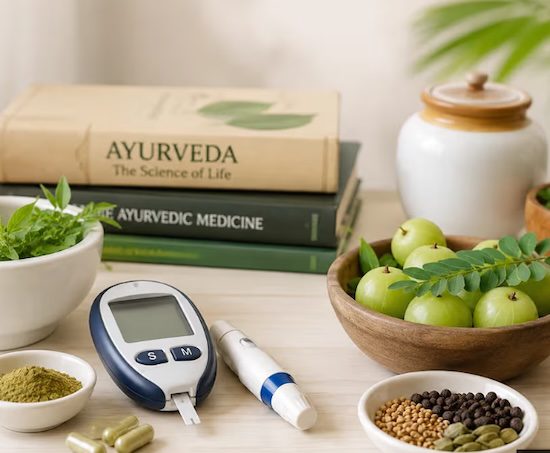
A presenter appears. A patient tells a story of transformation. A practitioner explains the supposed secret. A bottle of herbal liquid or capsules is displayed. And then comes the promise: a permanent cure for diabetes.
According to the International Diabetes Federation (IDF), an estimated 1.6 million Sri Lankan adults aged 20–79 were living with diabetes in 2024, representing an age-standardised prevalence of about 10.2%. Nearly 38% of those individuals—more than 600,000 people—are estimated to be undiagnosed. Broader metrics from the World Health Organization among Sri Lankans aged 30 and above estimated a prevalence of 31.2% in 2022 (equivalent to roughly 4.2 million people), noting that approximately 41% were not receiving treatment. While the differing age cohorts and methodologies explain the numerical gap, both figures point to the same sobering reality: millions of Sri Lankans are living with this condition, and many are vulnerable to predatory commercial exploitation.
For somebody living with diabetes, claims of a miracle solution are extraordinarily powerful. I know that vulnerability intimately because I have lived with diabetes for 35 years. For more than three decades, my search for better management took me across the globe—from specialised centres in the United States, the United Kingdom, Norway, China, and India to traditional medicine practices in Thailand, Nepal, and Bangladesh.
If someone could genuinely offer me a safe, permanent cure, I would spend my last cent to obtain it. I would gladly give up almost anything for the freedom to eat without calculating consequences, to travel without carrying supplies, to avoid painful daily insulin injections, and to live without the relentless discipline of a chronic disease.
Yet after 35 years, I have arrived at a reality far less sensational than television advertisements: there is no universally available permanent cure for diabetes.
Type 2 diabetes is distinct from Type 1, and some individuals can achieve what clinicians define as remission—normal blood glucose levels sustained without glucose-lowering drugs, achieved typically through substantial, monitored weight loss or metabolic surgery. But remission is an ongoing state, not a guaranteed, irreversible cure.
If global medical research has spent decades investigating diabetes, and the world’s leading endocrine authorities still distinguish carefully between treatment, remission, and cure, how can an over-the-counter herbal preparation selling for several thousand rupees accomplish what medical science has not?
More critically: who is allowing these claims to reach the Sri Lankan public?
1. The Myth of the Miracle Bottle
Managing diabetes is a lifelong, active discipline. Diet, physical activity, weight management, appropriate pharmacotherapy, and regular biochemical monitoring all matter. Most of all, clinical knowledge matters.
There is no herbal concoction that grants a patient permission to discard these fundamentals. Yet watching modern advertisements, one can easily see how patients are persuaded to abandon established regimens. These campaigns are not selling standard consumer products; they are commodifying hope.
2. The Evidence: Documented Saturation, Not Anecdote
This issue is not merely an impression. A study conducted by researchers from the University of Colombo, the University of Peradeniya, and the Department of Ayurveda examined commercial promotions across Sri Lankan television, radio, print, and digital platforms.
Over a two-month sampling period, researchers identified 285 advertisements representing 128 distinct Ayurvedic and herbal products. Television accounted for 57.9% of these ads. Crucially, 5.6% specifically claimed diabetes as an indication.
The study’s findings were stark:
* 64.8% of television advertisements were broadcast repeatedly, with some airing up to 24 times;
* None of the advertisements disclosed potential side effects or contraindications;
* Only 8.1% displayed a valid registration number or formal regulatory approval;
* Advertised product prices peaked at Rs. 6,999.
Aggressive, unsubstantiated health advertising in Sri Lanka is now an established empirical reality.
3. The Economics Behind the Rs. 7,000 Bottle
A retail price of nearly Rs. 7,000 does not, on its own, prove malpractice. A fair investigation must examine the underlying cost structure:
* Raw material sourcing and botanical authentication;
* Standardised active-compound extraction;
* Good Manufacturing Practice (GMP) batch consistency;
* Independent toxicological and stability testing;
* Mass-media airtime, social media ad-spends, and telemarketing overheads;
* Celebrity, influencer, or practitioner endorsement fees.
When millions of rupees are being drawn from the public purse for unverified formulations, financial transparency and cost-to-efficacy analyses become matters of legitimate public interest.
4. The Illusion of Familiarity
Having worked in television for decades, I understand the psychological power of media repetition. When a viewer sees the same presentation day after day during prime-time broadcasts, familiarity is easily mistaken for institutional endorsement: “If this product appears on television every day, surely the authorities have vetted it.”
That assumption is dangerous. Frequency of broadcast indicates nothing more than an advertiser’s budget. It provides zero verification of therapeutic safety or efficacy.
5. Regulatory Authority: The National Framework
Sri Lanka is not an unregulated territory. Statutory mechanisms already exist to address these abuses:
The National Medicines Regulatory Authority (NMRA) Act No. 5 of 2015: The NMRA holds explicit authority over medicines, medical devices, and “borderline products”—including botanical extracts making therapeutic claims. Under NMRA regulations, products require prior written clearance before promotional materials can be broadcast. Crucially, the law prohibits advertising to the general public for the treatment, prevention, or cure of designated non-communicable diseases, including diabetes.
The Ayurveda Act No. 31 of 1961: Overseen by the Department of Ayurveda, this legislation governs traditional formulas, manufacturers, and dispensaries. While over-the-counter preparations have advertising allowances, modern proprietary mixtures, modified extracts, and prescription lines are explicitly barred from direct-to-consumer mass promotion.
The Consumer Affairs Authority (CAA) Act No. 9 of 2003: Sections 30 and 31 prohibit deceptive conduct and false representation regarding the characteristics, performance benefits, or regulatory approvals of commercial goods.
The core problem is not an absence of laws, but a fragmented, siloed enforcement structure that allows borderline products to operate in regulatory blind spots.
6. Institutional Scrutiny: Precedents Exist
Accountability is possible when regulators act. In 2024, controversy arose surrounding Vernolac, a traditional formulation associated with the University of Colombo that had been promoted using aggressive claims regarding cancer stem cells. Following sustained public and professional scrutiny, the Department of Ayurveda stepped in, halted promotional activities, and referred the dossiers back to technical review panels.
The precedent is clear: institutional or academic prestige cannot serve as a blanket license to bypass evidence-based advertising standards.
7. The Digital Drift: Deepfakes and Misappropriated Identities
As traditional broadcast rules face tightening, predatory marketing has expanded rapidly across digital ecosystems.
* In 2024, Professor Arjuna de Silva was forced to lodge formal complaints with law-enforcement and cybercrime units after digital campaigns used fabricated statements and manipulated video clips falsely attributing herbal diabetes endorsements to him.
* In early 2026, an online campaign marketing capsules titled “Glucocare” circulated across social networks promising complete diabetes cures. The campaign unlawfully hijacked the name and likeness of leading endocrinologist Professor Prasad Katulanda. The Sri Lanka College of Endocrinologists promptly issued a formal warning alerting the public that neither the College nor Prof. Katulanda had ever endorsed or approved the product.
Targeted algorithmic advertising, coupled with fabricated expert testimonials and direct-to-consumer WhatsApp dispatch, allows unscrupulous distributors to evade traditional oversight entirely.
8. Beyond Ineffective: The Direct Clinical Danger
The danger of these preparations is not merely economic waste; it is acute clinical harm.
A study from the University of Peradeniya evaluating 11 over-the-counter herbal preparations sold for diabetes revealed alarming findings: none of the tested products carried complete, accurate safety labels. None provided warnings about the risks of severe hypoglycaemia, and the vast majority omitted crucial information regarding adverse interactions, renal-hepatic burdens, and drug-herb incompatibilities.
If an unstandardised herbal preparation with glucose-lowering properties is consumed alongside prescription medications like sulfonylureas or insulin, blood sugar can drop to catastrophic, life-threatening levels (severe hypoglycaemia). Conversely, if a patient is deceived into abandoning prescribed insulin or oral therapies altogether, the result can be uncontrolled hyperglycaemia, hyperosmolar hyperglycaemic state (HHS), diabetic ketoacidosis (DKA), and accelerated microvascular and macrovascular damage.
9. The “Suppressed Cure” Conspiracy Narrative
Predatory campaigns rely consistently on a standard psychological playbook:
* “Western medicine only treats symptoms to keep you sick.”
* “Big Pharma and medical doctors are concealing the truth.”
* “Ancient ancestral secrets are finally revealed.”
By manufacturing institutional distrust, sellers establish an unchallenged emotional monopoly over anxious patients. When an individual living with Type 1 or advanced Type 2 diabetes internalises this conspiracy and ceases standard therapy, the outcomes are medically devastating.
10. Respecting Traditional Heritage Means Demanding Rigour
Rejecting fraudulent advertising is not an attack on indigenous medicine. Sri Lanka possesses a venerable tradition of Ayurveda and Deshiya Chikitsa. Botanical agents contain genuine biologically active phytochemicals.
For instance, Gymnema sylvestre (Gurmar) has been studied for its potential effects on carbohydrate absorption and insulin release. Fenugreek (Trigonella foenum-graecum) has demonstrated modest supportive effects in clinical trials.
However, acknowledging that a botanical compound exhibits a measurable physiological effect is fundamentally different from claiming that a proprietary liquid permanently eradicates a complex metabolic disease. The former is a rational pharmacological inquiry; the latter is an unsubstantiated commercial claim.
Let Science Test the Getafix Potion
I am not asking the Sri Lankan government to suppress traditional medicine. I am asking the government to take it seriously enough to test it.
If one of our modern-day Getafixes—concocting their private magic potions behind closed doors—claims to possess a cure for diabetes, let them submit it to the unsparing scrutiny of clinical science.
Analyse the raw ingredients. Standardise the preparation. Identify and isolate the active phytochemical compounds. Screen rigorously for heavy-metal toxicity, adulterants, and synthetic additives. Design and execute double-blind, randomized controlled trials. Measure the objective biomarkers: HbA1c, fasting plasma glucose, postprandial levels, and insulin resistance. Track adverse reactions systematically over months and years to see if the claimed outcomes actually hold up.
If the potion works: celebrate it. Secure international patents, scale high-GMP domestic manufacturing, publish the breakthroughs in peer-reviewed journals, and turn Sri Lanka’s indigenous knowledge into a multi-billion-dollar global pharmaceutical industry that transforms diabetes care across the world.
But if it fails to withstand scientific testing: tell the public plainly. Do not permit television studios, radio waves, and sponsored social-media feeds to serve as the unmonitored testing ground where desperate patients experiment upon their own bodies.
A 10-Point Challenge to Regulators
To protect public health, coordinated action is urgently required between the NMRA, the Department of Ayurveda, the Consumer Affairs Authority, the Ministry of Health, and law-enforcement cybercrime units:
Establish a Unified Public Register: Compile an accessible online registry of all commercial products permitted to market formulations for metabolic health.
Verify Advertising Clearances: Enforce the requirement that any health-product broadcast display an unforgeable, active regulatory clearance identifier.
Mandate Clinical Substantiation: Obligate any brand claiming glycemic control to present randomized, controlled clinical trial data to a joint NMRA-Ayurvedic technical committee.
Conduct Blind Analytical Testing: Run independent laboratory screenings on commercial batches to detect heavy-metal contamination, microbial spoilage, and illicit adulteration with synthetic oral hypoglycaemic agents.
Standardise Safety Labeling: Legally mandate prominent package warnings concerning hypoglycaemia and drug-herb interactions.
Eliminate Fabricated Testimonials: Ban unsubstantiated personal claims in health broadcasts, treating paid dramatic reenactments as deceptive trade conduct.
Prosecute Medical Identity Theft: Aggressively investigate and prosecute digital networks misappropriating the identities, credentials, and likenesses of medical professionals.
Prohibit Medication-Stoppage Messaging: Classify any advertisement directly or implicitly discouraging standard medical therapy as a public-health offence.
Hold Broadcasters Accountable: Impose statutory liabilities on media networks and digital aggregators that accept revenue for unvetted, misleading therapeutic promotions.
Publish Enforcement Decisions: Make product suspensions, recalls, and court convictions visible to warn the general public.
My Challenge to Sri Lanka’s Getafixes of ASsterix & Obelix fame
The genuine price of a counterfeit cure is never confined to Rs. 7,000.
The real cost is counted in irreversible nephropathy ending in dialysis; proliferative retinopathy leading to blindness; peripheral neuropathy culminating in non-healing ulcers and limb amputation; unheralded myocardial infarctions; and strokes. It is measured in depleted savings that should have supported a family’s welfare.
After 35 years of living with diabetes, I would still gladly be proved wrong. If one of Sri Lanka’s modern-day Getafixes truly possesses a genuine magic potion, I invite them to step forward and prove it.
Do not show me a paid television presenter. Show me the peer-reviewed clinical trial.
Do not show me an actor’s testimonial. Show me the laboratory analysis.
Do not claim that the medical establishment is suppressing the truth. Publish the data for the scientific community to scrutinize.
Do not whisper that patients should stop their insulin. Demonstrate that your formula works safely, effectively, and reproducibly.
Until that empirical standard is met, peddling an unverified miracle to people living with chronic disease is not entrepreneurship. It is the cynical exploitation of human suffering.