

By Jehan Perera –
Jehan Perera
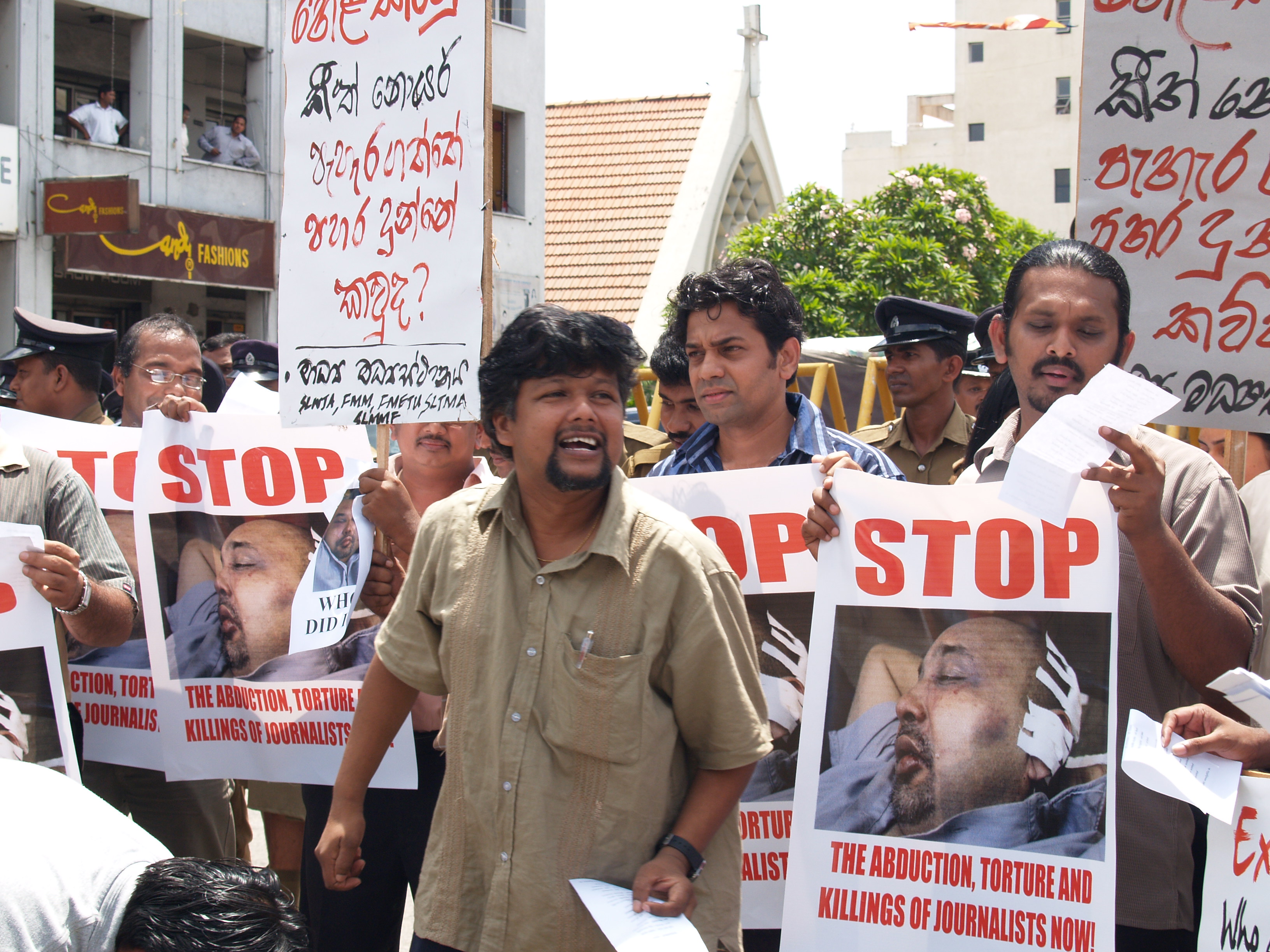
The NPP government is going after powerful figures from the past and present who have engaged in corruption, fraud and criminal activity in a way that no previous government in Sri Lanka has done. Former ministers, politicians and senior state officials are among those facing investigations and legal proceedings. The government has placed before Parliament a document listing 50 cases involving corruption, fraud and other crimes. These include not only financial offences but also cases relating to the Easter Sunday attacks, the killings of Lasantha Wickrematunge and Wasim Thajudeen, the disappearance of Prageeth Ekneligoda and attacks on journalists Keith Noyahr and Upali Tennakoon.
The significance of this effort is that it can demonstrate that nobody is above the law, regardless of political connections or social standing, which will help restore public confidence in institutions that have long been distrusted. It could also recover public resources, improve the investment climate and strengthen the foundations for a more prosperous and just Sri Lanka. When criticised for focusing on the past and not the present, the government position is that these investigations were initiated under earlier governments, particularly between 2015 and 2019, and that it is now allowing investigators to proceed to deal with the backlog without political interference.
But there is an aspect of the government’s approach that is less justifiable. While pursuing past wrongdoing by powerful individuals, it is also advancing a triumvirate of draft laws that could give the state sweeping powers over citizens, organisations and dissent in the present and future. The draft Prevention of Terrorism legislation, the Prevention of Organised Crimes Bill and the NGO Registration and Supervision Bill raise serious questions about the over-centralisation of power. Each of these laws strengthens the powers of the state while weakening the rights and safeguards that protect people from their misuse and thus questions the basic rights of people in democracy where ‘the power of the people is vested in the government’. This is a recipe for future misrule rather than the rule of law. As the well-known saying goes, power corrupts and absolute power corrupts absolutely.
Proposed Laws
The real test of system change, for which the government obtained an overwhelming mandate, requires not only a government willing to hold others accountable, but one prepared to subject itself to the same principles of legality, transparency and restraint. The three proposed laws that are particularly important in this regard are the Protection of the State from Terrorism Bill, the Prevention of Organised Crimes Bill and the NGO Registration and Supervision Bill. Each of these draft laws has been presented as serving a legitimate purpose. Preventing terrorism, combating organised crime and ensuring that NGOs do not facilitate money laundering or terrorist financing are proper responsibilities of the state. Sri Lanka has international obligations in these areas, and no responsible government can disregard them. However, the existence of a legitimate objective does not justify every means adopted to achieve it.
The proposed Protection of the State from Terrorism Bill illustrates the problem. Although its definition of terrorism draws on a model developed by a former United Nations Special Rapporteur, the Human Rights Commission of Sri Lanka has warned that the definition of terrorism extends beyond the model and could bring legitimate political protest, trade union action and civil disobedience within the scope of counter-terrorism legislation. Its concerns also include prolonged detention, inadequate judicial oversight and restrictions on access to legal counsel. These are objections that go to the heart of the relationship between the citizen and the state. The government cannot credibly promise to protect democratic freedoms while creating powers that could be used to restrict them. It is necessary for the government to reassess the draft through transparent consultation and revise provisions that could criminalise legitimate dissent.
The Prevention of Organised Crimes Bill raises similar concerns. It is presented as giving effect to the United Nations Convention against Transnational Organised Crime, which Sri Lanka ratified in 2006. The Centre for Policy Alternatives (CPA) has argued that the convention does not require many of the bill’s provisions. The proposed law extends to a broad range of offences, permits detention orders lasting up to a year, makes confessions to police admissible for purposes of legal evidence, and introduces extensive surveillance powers. A law intended to dismantle criminal networks should not create a parallel system of exceptional powers that could be applied far beyond organised crime. Nor should safeguards developed through years of experience with abuses under the Prevention of Terrorism Act be weakened through legislation bearing a different name. The government should review whether or not existing laws could be used effectively to control these crimes or whether each exceptional power is necessary.
Civil Society
The proposed NGO Registration and Supervision Bill presents another test of the government’s intentions. The government may reasonably seek transparency in the finances of organisations receiving public or foreign funds, including measures to prevent money laundering and terrorist financing. It seeks to justify its overreach on the grounds of meeting the internationally mandated requirements of the Financial Action Task Force (FATF) for the Asia-Pacific region. But these objectives do not justify placing civil society and NGOs under excessive administrative control when even the FATF ranks them as low to medium risks. The draft bill would require registration and renewal, impose extensive obligations on organisations and empower authorities to suspend or deregister them on broadly framed grounds. It is important to redraft provisions that confer excessive discretion over registration, renewal, suspension and deregistration of NGOs.
Among the concerns raised by United Nations human rights special rapporteurs with regard to the draft NGO law are provisions requiring organisations to align with government policies and restrictions that could affect advocacy, dissent and freedom of association. The implications extend well beyond organisations that engage directly with the government. Community groups, human rights organisations, independent researchers and organisations working on reconciliation or accountability could find their activities constrained by uncertainty over how these provisions might be interpreted. Organisations that criticise government policies are not thereby working against the country. Their freedom to do so is part of what distinguishes a democracy from a system in which the government determines which opinions and activities are acceptable.
The government has generated considerable public goodwill through its pursuit of corruption and criminality. It should not assume that this goodwill gives it an unlimited mandate to strengthen the coercive powers of the state. The NPP knows from its own history that governments can treat dissent as a threat and use the machinery of the state against their opponents. There is still time to correct the drafts through transparent public consultation, narrow definitions of offences, meaningful judicial control over detention and surveillance, and effective remedies against arbitrary decisions. A government that pursues corruption while weakening safeguards against state abuse risks undermining its own achievements. Besides bringing to light the abuse of power by previous governments, the NPP government needs to build a system in which no future government can abuse power in the belief they can get away with it.
Naman / October 14, 2026
“ system in which the government determines which opinions and activities are acceptable.”
We have had the so called
“democracy” in SL for so long with all the undemocratic activities committed by the STATE and by the majority race for decades. Who in the right mind would tolerate a march by the clergy from Kandy to Colombo in order to support a Monk who has broken the laws of the country. This so called monk had been utilised by Rajapaksas to promote violence against the minorities. There are others in the clergy who are being manipulated by the political parties.
JR’s march from Kandy to Colombo against the B-C pact too brought instability to the country. The QUESTION is whether we want to stop these kinds of people to work against the good intentions of the government
/
Naman / October 14, 2026
Currently, some of the sections of the media are giving prominence to the Professors politicians academics etc who were associated with the past governments that had inflicted great harm to our motherland. These media needs to support the good intentions/actions/plans of the government and promote public to get involved with “ Clean SL” and other social/community improvement projects. We need to support the media that’s trying to educate the public against the drug culture in this country. This drug culture had been promoted in the past in the war affected areas with an ulterior motive of bringing down the minorities economy and education. Unfortunately this problem has spread throughout the country and is working against the economic recovery
/
nimal fernando / October 14, 2026
Jehan old chap …….. where were you calling for good ol’ accountability …….. when tie-coated, cheese and wine circuit, Wolverhampton Ranil …….. was using all the state apparatus ……… to daily harass journalists, priests and others speaking up for civil liberties and a bit of ol’ accountability?
–
Did Ranil’s own Beria, specially selected for his unique set of unmatched virtues, ol’ Deshabandu pay you to keep silent?
–
Some paid ol’ Bandu to look the other way …….. and Bandu paid some to look the other way.
–
Now freedom reigns …….. you know your limbs, teeth, head, bottom are safe from sticks and stones, S-lon and barbed-wire …….. you bravely ask for accountability!
–
Can we have a bit of acknowledgement first?
–
Or would a little acknowledgement put NGOs out of business?
–
Even for ‘Goodness’ Lankans have to get paid! :)))
–
Externalized Buddhism is a money-machine …… if it’s money that gets you to pull out your virtues ……. then it’s time for you to switch horses.
–
Or straddle two horses.
–
–
You play Buddhism on TV
That ain’t workin’
Money for nothin’ and your 14-year old chicks for free
/
LankaScot / October 14, 2026
Hello Nimal,
You just proved me wrong “I used to say “You can’t ride two Horses with one a*se”.
Best regards
/
nimal fernando / October 15, 2026
In the other thread – where comments are closed now – some talked about a Professor E.O.E. Pereira at Peradeniya.
–
I did a search and found this ……… some of you might find it interesting ……….. https://thuppahis.com/2018/10/14/remembering-eoe-pereira-engineer-guru-a-man-of-the-people-for-the-people/
/
chiv / October 14, 2026
As expected
Another scum came out defending Ganasara
Former CJ Sarath
Not to confuse with our
Dip -Low – floor Mat
Says sending thug to prison is unconstitutional 😅🤣😂
Meantime Gammanpillay claimes to witness
police raping / forcibly disrobing raping an Ape.
What’s next ?????
/
old codger / October 14, 2026
Chiv,
“Another scum came out defending Ganasara”
Yes, the same one who was caught disrobed in a car with an “unrelated female”.🤣🤣🤣🤣
Isn’t it strange how these great defenders of tradition have secrets to hide? But one thing they have in common is the lack of any sense of shame.
/
chiv / October 14, 2026
Native is right
In past few years few
Hindu Wannabes have mushroomed in North and East.
Apparently
well financed by outside sources.
😁
/
chiv / October 14, 2026
My sincere appreciation to AKD and NPP Government for saving Anojan’s life.
To me this is the first time any Lankan government sincerely committed and did what ever it takes, using all possible channels
by sending a legal team , appealing the case in Saudi Supreme Court, ,
Lankan ambassador , FM / Foreign Employment officials using diplomatic channels, AKD’s personal involvement and request to Saudi Govt ……..
Truly a team effort in saving a life, leave alone Tamil.
/
nimal fernando / October 15, 2026
Gotta give credit where credit is due.
–
LM has already eloquently waxed lyrical about what an incompetent useless bloke AKD is …….. who can’t even say boo to a goose …… nothing more to add.
–
Believe this was solely responsible for the poor lad’s reprieve. ………. https://www.colombotelegraph.com/index.php/the-fate-of-sivarasa-anojan-a-clarion-call-for-proactive-diplomacy/
–
That made the Saudis realise the enormous diplomatic firepower at our disposal.
–
He already has enough on his plate ……. MBS didn’t want to open another battlefront worse than even the Houthis ……… and silently capitulated
/
old codger / October 16, 2026
Nimal,
“That made the Saudis realise the enormous diplomatic firepower at our disposal”
🤣🤣🤣🤣🤣🤣🤣
Complete with a deadly repeating record………
/
LankaScot / October 16, 2026
Hello OC & Nimal,
“Saudi Arabia has carried out over 2,000 executions since King Salman and Crown Prince Mohammed bin Salman (MBS) came to power in January 2015”.
They even execute young men for non-violent crimes committed when they were underage. Here is an impending case – https://www.theguardian.com/global-development/2026/oct/16/saudi-arabia-to-execute-man-for-being-at-protests-and-funerals-when-he-was-15
Most of the Saudi Workers that I met in Ras Tanura were Shia. Every so often the Saudi Military would “Mow the Lawn” by cracking down on various Shia Villages; 1996 was quite bad after the Al Khobar Towers attack against US Military Personnel.
By the way on “Food Cartels” could Sri Lanka learn any lessons from this Philippines case – https://www.bbc.com/news/articles/cmwyvwyp9dgro
Best regards
/
leelagemalli / October 16, 2026
Chiv,
.
Do you have any evidence or links showing that AKD-led groups were instrumental in suspending the execution of the Tamil boy, Anojan? We must acknowledge facts rather than blindly credit the government or groups associated with CT Forum.
–
Having fled to Europe, unable to bear the JVP’s fascist activities in the late 1980s, I witnessed the brutal killings of people close to me and the lifelong mental anguish inflicted on their mothers.
Knowing how deeply you respect your nonagenarian mother, I urge you, for all mothers’ sake, to examine the facts before commending AKD and his government, which I believe exhibits authoritarian tendencies.
/
chiv / October 17, 2026
LM ,
Why not check it out your self.
A group of leading Lawyers appointed by AKD represented Anojan in Saudi
Isn’t that enough ????
I’m sure Ranil , Sajith or Rajapaksas
has never ever send anyone in such cases
Lot of Tamil politicians , Hakeem Richard . B , Arjuna so called community mouth pieces, Theras and others did the talking
As usual many tried politically exploiting a human tragedy
Give me one example where a life in similar situation was saved by any Lankan Government???
There are many womem employed in GCC
tortured , abused , even burned …. appealed desperately to Lankan embassies to save their lives and
all we heard from govt is
” we are looking into it , we are talking to diplomats / employment bureau….
Typical blah … blah “
During recent crisis in Iran or Covid
Indian government helped in airlifting Lankans
What happened to you is unfortunate
So is the case with hundreds of people and me
This has no relevance to it
/
Native Vedda / October 15, 2026
chiv
–
Should we oppose the use of saffron as a symbol of religious nationalism when it is used to promote division, intolerance or the marginalisation of others?
/
nimal fernando / October 15, 2026
Native,
–
Not exactly Ranil’s VW factory ………… but something for your friend ……. https://www.youtube.com/watch?v=Zkz2KDzjZ7o&t=5s
/
Native Vedda / October 17, 2026
nimal fernando
–
Thanks, it is encouraging.
Could you confirm whether Lalkantha and Tilvin knew about this workshop that converts left-hand hammers into right-hand drive?
–
Both would go ballistic if they knew that the workshop was facilitating the infiltration of American capitalism. By the way, they have both tolerated Chinese infiltration and its brand of capitalism.
/
chiv / October 17, 2026
Native
Saffron is now the most hated color to me
After leaving Lanka I thought I was free from it ( menace)
Here I’m.surrounded by Saffron of different kind 😅🤣😂
/
leelagemalli / October 14, 2026
Readers,
Whenever I am compelled to read the writings of Jehan and Dayan Jayatilleka or Malinda Seneviratne, I immediately wonder where they were during the years of maladministration under Mahinda Rajapaksa. Today, the ruler cannot claim to be above criticism when the government appears to target its opponents while allegedly pressuring opposition leader Sajith Premadasa with threats if he continues to challenge them. Namal Rajapaksa may have been involved in activities associated with his father or uncles, but guilt must be established through evidence, not family connections. I oppose indiscriminate remanding of political figures when their contributions to the public good must also be considered alongside allegations of corruption. Nevertheless, accountability must apply equally to everyone, regardless of political affiliation. The deeper problem is a public mindset that often fails to recognise corruption, abuse of power and moral hypocrisy, even when these are concealed behind the respectable façades of Sinhala Buddhism, Christianity, Islam or Hinduism.
Tbc
/
LankaScot / October 16, 2026
Hello Leelagemalli,
One of the first things that a new Sri Lankan Government should do is to strongly declare that Presidents and Members of Parliament are NOT Rulers, but Representatives of the Voters and their Families. This sort of mindset gives the Politicians powers that they don’t (shouldn’t) have. I have had many run-ins with Politicians that proclaim a mealy mouthed agreement that – yes they are representatives, but. It is that “but” that gives the game away.
Donald Trump will find out soon that he doesn’t have immunity (or impunity) and will be held accountable. Either that or he will go “full Fascist” and declare a State of Emergency”. The downfall of Trump will lead to many changes throughout the World and these will directly affect Sri Lanka.
Orwell’s dystopian 1984 is already happening in the UK where an Irish Novelist Sally Rooney has had to withdraw her books from Sale in the UK for her support of Palestine Action.
Best regards
/
leelagemalli / October 16, 2026
Hello LS,
thanks.
I am surprised how few CT-forum commenters question this issue. Perhaps they, too, reflect a society that has lost its sense of right and wrong. Criticising my eloquence in exposing the weaknesses of the AKD, without addressing the substance of my arguments, is both disappointing and revealing. Our people must learn to look beyond personalities and recognise the deeper issues. The rulers, meanwhile, must set new records and prove they are genuinely different from their predecessors.
/
leelagemalli / October 14, 2026
cont.
–
After the war ended in May 2009, rebuilding the nation should have meant more than physical reconstruction. It should also have involved cultivating civic awareness, ethical responsibility and a clear understanding of right and wrong. Today, the comments of both Mahinda Rajapaksa’s supporters and AKD’s supporters often reveal how readily people surrender independent judgment to political loyalties. My concern is that AKD’s government increasingly risks misleading the public while exploiting religious sentiment, particularly Sinhala Buddhist identity, to maintain political support.
This is not unique to Sri Lanka; religious identity can be manipulated for political purposes across the United States, Europe, the Middle East and South Asia. A responsible leader must understand these social realities rather than underestimate them.
–
To me, AKD’s confrontational approach resembles that of a honey badger:https://www.youtube.com/watch?v=RNPJgmLEfD4
fearless in attacking opponents, yet seemingly failing to recognise the consequences of provoking stronger forces. Ultimately, leadership requires not merely the courage to confront adversaries, but also the wisdom to recognise limits, accept criticism and act in the national interest.
/
leelagemalli / October 14, 2026
This government came to power promising greater transparency and accountability, yet the reality before our eyes appears to be the exact opposite. While opposition figures face intense scrutiny and investigations, serious allegations involving those in power seem to remain unaddressed. What happened to the investigation into the alleged illegal release of 323 harbour containers? Why have the assets of ministers such as Wasantha Samarasinghe and Lalkantha not faced thorough scrutiny? Why has there been so little public discussion about the Finance Secretary’s alleged approval of a USD 2.5 million transfer reportedly linked to a phishing attack? These are serious questions that deserve clear answers, independent investigations, and public accountability.
–
Instead, the government appears more focused on pursuing its political opponents, often amid questions about the strength of the evidence, while pressing public concerns remain unresolved. The suffering of Ditwah flood victims is another painful example. Despite promises of assistance, many continue to struggle, and reports suggest that only 8% of the World Bank grant has reached its intended beneficiaries. If these reports are accurate, where has the remaining money gone? People deserve transparency, timely relief, and responsible leadership—not grand promises, political rallies, and unanswered questions.
/
Ganjapani Gorakapola / October 15, 2026
An excellent and thought-provoking commentary that captures the growing frustration and disillusionment of ordinary Sri Lankans.
The NPP came to power on the strength of extraordinary promises of transparency, accountability, equality before the law, and genuine systemic change. The public is therefore entitled to ask whether these promises have translated into meaningful improvements in their daily lives.
Your central question is particularly compelling: What tangible benefits has this government delivered to ordinary citizens?
Political rhetoric, grandstanding, and the relentless criticism of past administrations are no substitutes for competent governance. A government must ultimately be judged not by the promises it makes or the failures it exposes in its predecessors, but by its own achievements.
Your call for accountability, humility, and meaningful action is timely and deserves serious consideration. Sri Lanka can ill afford another cycle of shattered expectations and public disillusionment.
/
leelagemalli / October 15, 2026
GG, thanks whoever-you-are.
Communal violence is not unfamiliar to Sri Lanka, and what we are witnessing on our television screens today should serve as a serious warning against the possibility of another tragic chapter in our history. The NPP leadership must act with greater pragmatism and sensitivity when addressing religious sentiments, particularly those of the majority community. Meaningful reform is essential, but it must be pursued with wisdom, restraint and respect for the beliefs of all communities. At a time when ordinary people are struggling to meet their basic needs amid unbearable living costs, economic insecurity can make them more vulnerable to political manipulation and religious extremism. The government must therefore prioritise tangible relief through affordable essential goods, medicines, fuel and electricity, alongside policies that restore public confidence. No political objective is worth the price of another bloodbath. Responsible leadership must recognise that national stability and communal harmony are inseparable.
Tbc
/
leelagemalli / October 15, 2026
cont.
Corruption undoubtedly contributes to economic decline, but it is not the sole explanation for Sri Lanka’s bankruptcy in 2022. The difficult recovery that followed required domestic sacrifices, international cooperation and painful economic decisions. Whatever our political differences, we must objectively assess the achievements and failures of every administration rather than allow hatred and partisan narratives to cloud our judgement.
–
The NPP government must demonstrate maturity, especially when confronting sensitive religious, ethnic and social issues in a nation still burdened by longstanding divisions. Religious leaders, political parties and civil society must also reject inflammatory rhetoric and prevent legitimate grievances from becoming instruments of communal hatred. Sri Lanka needs economic recovery, social justice and responsible reform—not another cycle of suspicion, violence and suffering. Let us demand accountability without hostility, challenge injustice without humiliating communities, and protect the peace of our island before tensions escalate into another preventable tragedy.
/
Douglas / October 14, 2026
We have gotten accustomed to living in a society where corruption, fraud, and crime are the norm. That ‘Norm’ was confirmed when the list of persons from all walks of life who have committed fraud, corruption, and crime was tabled in Parliament.
This ‘Norm’ must be made ‘Abnormal’.
To arrest this situation and bring sanity, new laws and amendments to existing laws are a ‘Must’.
I congratulate the NPP Government for pursuing that effort and, hopefully, at the end of its term, we will enjoy a sigh of relief.
/
Ajith / October 15, 2026
“I congratulate the NPP Government for pursuing that effort and, hopefully, at the end of its term, we will enjoy a sigh of relief.”
As a Sinhalese you have to congratulate NPP government for its committement to do with corruption, fraud and crime of the past. But as a Tamil speaking non-Buddhist citizen of this nation, I cannot feel the same.
/
Douglas / October 17, 2026
Ajith: Sometimes the ‘Feelings’ to be effective take time.
/
Douglas / October 14, 2026
“Accountability Without Abuse Of Power” – Recently at a meeting organized by the ‘All Ceylon Buddhist Congress, a former Chief Justice Sarath Nanda Silva, said that the Jail Term imposed on Galagoda Aththe Gnansara was “Illegal’ and, according to the law, he could only be given “6 months” jail term’
You want to know who this ‘Chief Justice’ Sarath Nanda Silva was? Watch:
https://youtu.be/yBgK4muRdVQ?si=Wv5F-Fq5U5dMcY2R
Don’t you agree that this man must be held ‘Accountable’ not only for past ‘Misuse’ of power but also for ‘Contempt of Court’ for publicly announcing and criticizing the judgment imposed on this Galaboda Aththe Gnanasara?
This is the ‘Dark Age’ we need to bury by making ‘Accountable’ all those who ‘Misused’ their power and committed fraud, crimes, and corruption.
/
leelagemalli / October 14, 2026
D, you-are-so-hilarious!
May I ask you to look at the bigger picture?
The opposition appears to be facing relentless investigations and court cases, while individuals accused of serious wrongdoing within the ruling party do not seem to face the same scrutiny. If corruption and crime must be investigated, they must be investigated equally, regardless of political affiliation, family connections, or status. President AKD continues to claim that the rule of law applies equally to everyone, but is that really the case? Douglas, why do you appear so one-sided? I fear that power is being abused through selective investigations and politically targeted arrests. Two years into his presidency, elected with around 43% of the vote, AKD seems far from fulfilling his grand promises. Instead, his approach increasingly appears focused on political revenge rather than meaningful national progress. His public speeches often raise questions about consistency and credibility. Promises to build 10,000 houses suddenly become 20,000 or more, while ambitious announcements about 4G towers lack convincing implementation plans. There are also serious concerns about how international grants intended for Ditwah victims are being spent, which deserve transparent, independent scrutiny. Is this not the same political culture previous leaders practised?
/
Douglas / October 15, 2026
Dear Readers of this forum:
Do you want to hear another “Hilarious” story of another ‘Bright’ member of the Rajapaksa family?
Watch:
https://youtu.be/W7gzqYxzTIQ?si=hpe_lcAldURSxdUD
This is the best-known ‘Mola Hathano’ ( Seven Brains) of this Rajapaksa family.
Enkoy!
/
leelagemalli / October 16, 2026
Readers, please open your eyes.
–
No doubt, Rajapaksa-era politics had its shortcomings, but we must also acknowledge the development projects initiated and the economic growth that reportedly reached around 8%. In contrast, looking at the AKD government’s performance over the past two years, we must ask what tangible progress has been achieved. National reserves, reportedly at USD 6.2 billion when the former government left office, remain an important benchmark for evaluating economic recovery and the effectiveness of current policies.
–
Sri Lanka was declared bankrupt in 2022, and the bold measures taken by former President Ranil Wickremesinghe and his relatively small cabinet helped stabilise the economy and rebuild reserves before the September 2024 election. Today, our priority must be sustainable economic revival, not political hostility or divisive agendas. We must help vulnerable citizens see the bigger picture, judge leaders by measurable results, and resist the spread of hatred that could further destabilise our nation. Sri Lanka deserves responsible leadership, economic progress, and a future far removed from the turmoil and suffering experienced by countries such as South Sudan.
/