


By Laksiri Fernando –
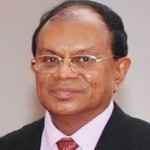
Dr. Laksiri Fernando
“Education is the most powerful weapon which you can use to change the world.” ~ Nelson Mandela
Apart from Nelson Mandela, there have been many philosophers and social activists who have emphasized the importance of educational reforms for social change and development. Among these were Confucius, Plato, Aristotle, Karl Marx, Mahatma Gandhi, Benjamin Franklin, Albert Einstein etc. We here however are not going to discuss the whole range of philosophical and world issues.
We are focusing on Sri Lanka and raising some crucial issues in the school and university education. The educational system in Sri Lanka is not a bad system. I have taught in Sri Lanka and Australia with some other countries at the university level. Likewise, my wife did teach in secondary schools in Sri Lanka and Australia. Our experience is that most Sri Lankan students are equal to Australian students intellectually, although their sphere of knowledge is narrower and limited due primarily to lack English knowledge. The students and also the teachers have the same predicament due to the same reason. However, the introduction of English language merely would not resolve the educational crisis.
There are two problematics usually identified in the educational system in general. First, is the funding difficulty. AI Overview says, “Sri Lanka spends one of the smallest shares of its national income on education in the entire world, leaving schools and universities with severe shortages.” Even figures are given in the AI Overview. However, this article does not directly address this problem.
Second, is the mismatch between the educational and student products from schools and universities and the requirements of the economy and the country. Again, the AI Overview says the following on the problem. “Sri Lanka faces a severe mismatch between its educational system and its economy, resulting in high youth unemployment and a shortage of job-ready graduates.” This is something that this article is trying to address, but not through a description of the problem, but making some ‘radical and rational proposals.’
School Education
If we first focus on the school education, one radical change that I can propose is to reduce the school years to 12, from 13. While most countries still have this traditional 13-year schooling system, there are some countries including Germany who have experimented the 12-year school system. Although still there are debates on the merits and demerits of these changes, for a developing country like Sri Lanka the benefits would be more and immense.
The world has seen the reduction of age for voting, legal adulthood, and marriage from 21 to 18 in almost all countries since 1970s. The main reason for this change has been the enlarging maturity of youth. But this change has not been taken into consideration in education unfortunately.
In the case of education, the possibilities of rapid or increased development have enlarged more than any other field. One reason for this possibility has been the development of IT (information technology) and AI (artificial intelligence). The reduction of school years also can give students more motivation and confidence. Even in my case (in early 1960s), I would have preferred to enter the university before the age of 18. The country and any government should keep the confidence/trust on the youth. Youth should be encouraged and motivated to do better.
There is however another need in Sri Lanka to protect children from abusive social media and internet. Like in Australia, there can be a ‘ban’ on social media for children under the age of 16. This is a task mainly for the parents. It has to be also understood that social media provides important information for children’s knowledge and development. Therefore, it is a task for the parents and particularly teachers to gather this positive information and provide them to the children. The schools should utilize this opportunity.
The reduction of school years also will make some financial ‘savings’ in the educational system. Even the families will benefit from these changes in economic and social terms. The spending on education in Sri Lanka is one of the lowest in the world, without exceeding 2% of the GDP. In the 2026 budget, the allocation for schools was around Rs 160 billion. The Ministry should not reduce the school budget in the case of the implementation of this proposal, but allocate the budget rationally to benefit the school system better than the present.
The reduction of school years can be at the primary education, reducing it from 5 to 4, although this can affect the present grade 5 scholarship examination. It should not be at grade 4. Even at present the scholarship selections do not work well given that majority of students are not mature enough to pass the examination. According to the recent results (September 2026), while 289,867 students sat for the examination, only 56,000 students got qualified for the scholarships.
Sri Lanka should have a better system, more students getting qualified for the scholarships. The way to do it is to have the examinations at Grade 8. By this time more and more students will be mature enough to sit for and get qualified enough for a competitive scholarship examination. If the student number sitting for the examination is around 300,000, at least 200,000 students should be able to receive scholarships. This would be a relief and assistance to parents, while students are motivated to study further and better.
From the primary education, Sinhala, Tamil and English language education should be introduced utilizing the information technology. Switzerland can be an example. In Switzerland, in addition to the official language in a specific Canton, English and another language (French, German or Italian) is introduced at the primary education.
While mathematics should be the primary skill that the primary school children should acquire, they also should be allowed to involve in sports and arts (music, dancing, painting etc). They also could be taught the country’s history within the context of world history. This article, however, does not go into the details of the curricula.
If the primary education is properly done, the students will be able to, ‘take-off’ during the period of junior secondary period (Grade 5-8). The teaching in this period should focus more on Mathematics, Science, English and Global Knowledge. The medium of instructions could be Sinhala or Tamil. However, the schools should give a prominent place to English.
The education for G.C.E. (Ordinary Level) examination could be two years as at present. However, English should be a compulsory subject for the examination, whether students pass or fail. English should be considered not as a ‘colonial inheritance,’ but a Lingua Franca. This means an international language. Every school also should select another (one) international language like Hindi, Chinese, Japanese, French, German etc. for the secondary level students to learn during the first year.
The main promotion of students for G.C.E. (Advanced Level) should be for sciences. Arts mean singing, dancing, poetry, painting etc. Sociology, Political Science, History, Finance and Management are not Arts. They are social sciences. This change of understanding and naming also should be in the university system. Even with this change of understanding and promotion, the main focus at the advance level should be on natural sciences. The country should produce scientists, technologists and skilled workers to develop and build up the country. The artists would emerge naturally also with the support of a changed school system.
In Universities
Radical changes are necessary not only in the school system, but also in the universities and university education. Every year, while around 160,000 students qualify for admissions to universities, the average intake is around 40,000. Although this is an improvement from the past, still the existing capacities in universities are not properly utilized. I am talking about the public universities only.
In all 17 universities, the average student number altogether throughout years has been around 130,000. This means one university averagely cater to only around 7,600. Of course, there are some universities cater, may be to the double of this number. However, overall capacities in universities are not properly utilized. Universities at least should cater to 50,000 students individually and annually. One way of doing this is to have two sessions per day, and this means some students are enrolled for evening classes. This might not be possible or appropriate in some remote areas. However, this can be done in Colombo and other urban areas.
I have seen evening universities in Hong Kong, Japan and even Australia. This will allow some students to work in the morning and attend classes in the evening. Of course, this should not be done in the whole week, but some days during the week and at least on Saturdays during the weekend. Although the Open University and Colombo University are already running courses in this direction, this can be expanded to cater to more students. If I am not mistaken, the Colombo University evening courses are limited to postgraduate studies.
University education should be completely in English. If some students are incapable in doing so, they should be given the beginning year to learn English. English should not be considered a British or colonial language. It is the past and not the present. As I stated earlier, English is a lingua franca, a common international language.
Another problematic in the university education is the imbalance between Arts and Sciences. In the first place, the universities should not call the social sciences, Arts. The names of the present faculties should be changed. If there are departments catering to music, singing, dancing, and paintings etc, those can be under a Faculty of Arts. But economics, political science, sociology, and even history should be under a Faculty of Social Sciences.
This is not merely a name change. Those subjects should be learned, taught and researched as ‘sciences’ to mean social sciences. There is a new trend to create faculties of management. That is a good trend which should be strengthened further.
When you consider the present university entrance or advanced level examinations, there are overwhelmingly ‘arts’ students. This has been a vicious cycle. Those who enter universities as arts students, graduate as arts graduates, and go and teach arts subjects and produce overwhelmingly arts students. It would take some time to change this trend. What should be done in the meanwhile in universities is to enrol these students for subjects like health care, nursing, tourism, business, and produce them for employment opportunities.
Conclusion
Sri Lanka’s educational system is not a bad system although there are some weaknesses to rectify and opportunities to promote. The above are some initial ideas with the readiness to accept criticisms and/or different views. However, the reduction of the school years to 12, instead of 13, does appear a must not only in Sri Lanka but also in other countries. Sri Lanka can take a pioneering initiative, exemplary to other countries. There can be an initiative to propose and discuss this matter with the UNESCO (United Nations Educational, Scientific and Cultural Organization) and other relevant organizations and countries.
In summary, the proposals in this article are as follows:
1. To reduce the number of school years from 13 to 12.
2. Introduce English as an international language (lingua franca), in addition to Sinhala and Tamil from the primary school years.
3. Promote Scientific Studies in schools instead of what has been mistakenly called Arts.
4. Make English as the medium of instructions in all universities allowing the disadvantaged students to obtain special assistance.
5. Increase the number of university admissions exponentially to suit the country’s requirements.
6. Promote universities to conduct evening sessions allowing students to work and study.
7. Rename the so-called Arts Faculties into Social Sciences and limit the Arts to music, singing, dancing, painting etc.
Jit / September 15, 2026
Laksiri, Govt is planning to establish 50 tech universities shortly. The core purpose is to create a dignified pathway for those who don’t wish to—or cannot—pursue traditional academic excellence and often drop out of high school, yet possess strong vocational or technical talent. It’s a way to give them recognized, respected qualifications and a real chance to build a stable, prosperous life in fields where demand is consistently high. This will be a genuine game‑changer in our education system, especially after a century of free education that largely focused on molding theoreticians and book‑worms. Were you unaware of that dimension, or did you simply choose not to acknowledge it?
/
Laksiri Fernando (Author) / September 17, 2026
Hi Jit, can you please give me a reference to the ‘Gov plan to establish 50 tech universities’ as you said ‘shortly’?
/
Jit / September 18, 2026
I assumed someone with an academic background would know how to use a search engine. Apparently that was optimistic. Anyway here is a clue:
https://english.newsfirst.lk/2026/07/20/50-vocational-universities-to-be-established-within-two-years
/
Laksiri Fernando (Author) / September 18, 2026
Hello Mr Jit,
I think people like you are misleading the public and destroying the image of the government. Your reference is about a very brief report of a speech made by a Minister reported by a journalist as follows.
“50 Vocational Universities To Be Established Within Two Years
by Staff Writer
20-07-2026 | 8:09 AM
COLOMBO (News 1st) – The government plans to establish 50 vocational universities across the country within the next two years.
Minister of Public Security Ananda Wijepala said this during an address held in Kurunegala.
The Minister said the initiative is aimed at ensuring students receive uninterrupted education throughout their school years.”
It is not the Minister of Education, but the Minister of Public Security who has said that. Why it is not in Government websites? It was said in the month of July. So far, no other information. If you have any, please inform us. I frankly don’t have any objection for ‘vocational universities.’ But it has to be realistic. My proposals were different. Why did you tried to dismiss my suggestions on that basis, don’t you have any other suggestions?
/
Jit / September 18, 2026
Laksiri, I genuinely sympathize with your wretched defence. I said, “Laksiri, Govt is planning to establish 50 tech universities shortly…” — and I quoted a senior minister, published by a leading news outlet. I have no reason to doubt the government’s stated intentions or the minister who is privy to that information. People respond to what leaders say in public; we don’t go digging through the Government Gazette to verify every policy announcement. Do you?
–
“….I think people like you are misleading the public and destroying the image of the government….”
–
Probably I am not as guilty as you for misleading the public and help destroying the country by closely associating with and being an Advisor to two of the most corrupt leaders SL ever produced – CBK and MR. Wasn’t it you, when working as a Professor at the Colombo university, who did all groundwork to confer an honorary Doctorate to a world class rogue – Mahinda Rajapaksha for the ‘yeoman services’ he did to the country?
/
Laksiri Fernando (Author) / September 19, 2026
Mr Jit. Now you are waging personal attacks. Who are you? Reveal your identity to check whether you are genuine or not. Do you really believe that Minister’s ambiguously reported statement is a correct government decision? To establish 50 tech universities shortly within next two years? Answer that question.
/
Laksiri Fernando (Author) / September 19, 2026
Mr Jit. Are you the journalist who wrote that report?
/
Jit / September 19, 2026
No, I’m not a journalist, so I did not write that article. Now my turn to ask questions: why do you think it didn’t undermine your academic profile — along with the reputation and prestige of the Colombo University — when you played the leading role in conferring Honorary Doctorates on that notorious rogue/murderer duo, Mahinda and Gotabhaya? Please dont beat around the bush – I’d appreciate a straight answer.
/
Jit / September 19, 2026
LF, I was not one who thought and took this personal. To be frank, I do not fancy getting into a perennial squabble with you over this because you have a bad reputation dealing with CT reader criticism as proven here:
–
https://www.colombotelegraph.com/index.php/rise-of-extreme-nationalism-in-australia/#comments
–
My initial comment asked one straightforward thing: why you omitted crucial vocational training from your proposals, especially when the government is considering elevating it to university status. Your reply — dripping with arrogance and needless snobbery — shut down any chance of a serious, informed exchange, particularly once you decided to take it as a personal affront.
–
Sow wheat, reap wheat. Sow oats, reap oats. At your ripe age, the difference shouldn’t still be a mystery.
/
Laksiri Fernando (Author) / September 19, 2026
Jit. Let us come back to the main point. (1) I don’t consider one brief report on 50 vocational universities is a reliable proof of a government policy. (2) You talk about technical universities. But that report talks about vocational universities. Is it the same or different. (3) Can you believe that any government can establish 50 new universities within two years? (4) It is true that I have not seen that brief report when I wrote my article. (5) However, even if I have seen that report, I would not have taken it seriously. (6) I was not talking about any government. I was expressing some general views. (7) Your reference to an earlier debate shows your personal intentions against me. Please answer all 7 questions.
/
Jit / September 20, 2026
Why should I bother to keep answering you when:
1. I have clearly expressed myself already AND
2. When you don’t answer any of my simple questions?
Unfortunately you are not a ‘professor’ in a Sri Lankan university teaching students with subservient minds [who are not allowed to question lecturers] anymore but just a citizen in CT exposed to the entire universe – like everyone else here.
/
Laksiri Fernando (Author) / September 20, 2026
Are you MAD?
/
Laksiri Fernando (Author) / September 16, 2026
Don’t stick only to what you are doing. That is not rational. Listen also to what others have to say.
/
Jit / September 16, 2026
Funnily, and quite paradoxically, your comment suits you the best. You’re fixated on the academic track and seem unwilling to acknowledge the other side. There is no need every student must go to AL because we all know, thousands of students have already dropped out by then because their strengths lie elsewhere. We need to address that as a vital issue rather than focusing on AL or prioritize naming ‘arts’ as ‘social sciences’. For decades, our mainstream system glorified book‑worms while treating vocational education as second‑class, even though most essential services in any society depend on people trained through vocational and industrial training. In that sense, awarding university‑level qualifications for vocational training is not only timely — it’s a necessity. It is being addressed by the current government and that was my point!
/
Anpu / September 16, 2026
Thank you Laksiri
“”Education is the most powerful weapon which you can use to change the world.” ~ Nelson Mandela”
Nelson Mandela is taught in history classrooms as a global symbol of peace, resilience, and the successful fight against the apartheid system of racial segregation in South Africa.
Sri Lanka should start teaching the real history of sri lanka in schools.
/
SJ / September 17, 2026
A
No school taught anyone how to overcome apartheid.
The most precious things in life are learned outside classroom walls
/
Anpu / September 18, 2026
Don’t you think that relying on a distorted version of history, and continuing to teach it, is one of the primary reasons we find ourselves in this situation today?
/
SJ / September 18, 2026
A
Without exception we are all subject to distorted versions of history as well as several other things.
There are the histories of Tamil language and Hinduism, the Tamil race and Tamil nation etc.
Then there is the history as presented in the Mahavamsa.
I have rejected arguments based on each of these falsehoods on various occasions only to be scolded by bigots for doing that.
What has been your stand in such matters?
Perhaps asking me to write a long essay or a book?
*
It is good be true to one’s self.
Denouncing lies should be a consistent exercise.
/
Anpu / September 19, 2026
Dear Prof,
Many thanks for your long reply. I agree with you completeley. I am not educated to your level and do not have the experience that you have. I am willing to learn and share my limited knowledge. My belief is Mahavamsa is the root course and the politicians (on both sides) made it worse. We need to put it right. I read a bit of https://thaiveedu.com/pdf/2026/July.pdf#page=114
This is the online translation of the first paragraph – “In the intellectual development of a society, the thinking, creativity and educational work of individuals play a very important role in shaping its direction. In this respect, Professor C. Sivasekaram occupies a distinctive place in the contemporary Tamil intellectual world. As an educator, literary critic, poet, translator and social analyst, his multifaceted contributions have had a significant impact both in the Eelam context and in the global Tamil sphere.”
/
Laksiri Fernando (Author) / September 19, 2026
Thank you, Anpu.
Yes, Mahavamsa is the ‘Mahavinase’ (Great Disaster).
/
Jit / September 20, 2026
Anpu actually addressed SJ, who holds the title of Emeritus Professor of Mechanical Engineering.
Check the connection of both comments!
How is your observation and comprehension skills these days my friend?
/
SJ / September 19, 2026
A
Thank you.
But seriously, please do not believe everything that you read.
Also do not take titles and academic qualifications too seriously.
*
The point I often make is that we fail to see our own faults when we accuse others of faults that we ourselves are guilty of.
It hurts many to be informed of this.
/
old codger / September 18, 2026
Dr. Laksiri has made some proposals:
.1. To reduce the number of school years from 13 to 12.
Why not a minimum of 8?. Emphasise practical skills during that period, and go easy on dancing, pirith chanting, etc. Students can progress to trade schools (not Universities). As in other countries, if they are good enough, they can earn degrees.even without O levels.
2. Introduce English as an international language (lingua franca), in addition to Sinhala and Tamil
English should be taught properly or not at all.That includes music, literature, culture, etc. But isn’t “foreign culture something that super-patriots don’t like? Half-assed English results in functionally illiterates, like some I wouldn’t wish to name.
4. Make English as the medium of instructions in all universities .
Who will teach proper English? All the teachers are either dead or working for International Schools.
5. Increase the number of university admissions ….
That means increasing the number of Universities. Though some loquacious politicians have promised 50 more in two years, the fact is we have built just 17 in about 75 years.
Where is the money? Do we need more unemployed graduates? For export perhaps?
/
Laksiri Fernando (Author) / September 19, 2026
Old Codger,
Thank you for your critical views and suggestions. I agree with the minimum of 8 years. Introduction of English in schools and universities of course would be a difficult task. We may have to first maximise the capacities of the existing universities to increase the number of university admissions.
/
LankaScot / September 19, 2026
Hello OC,
I was mistaken in believing that the 200 word limit was correct, so I tried to post a reply that was 197 words long according to CT. Unfortunately it said that it had exceeded the 200 word limit and deleted everything that I wrote. I will have to go back to my old method of cutting and pasting from a Word Document. Rant finished!
Best regards
/
old codger / September 19, 2026
LS,
Yes, I discovered that with the comment above . The system wouldn’t accept 197 words. I had to go back and do some heavy editing, which is why the quotes from Laksiri are chopped short.
“and deleted everything that I wrote.” If you hit the back arrow and tap on a “reply” box, you’ll find that the text magically reappears.
/
LankaScot / September 19, 2026
Hello OC,
I tried that, but it didn’t work with my Browser for some reason,
Best regards
/
LankaScot / September 19, 2026
Hello OC,
My nephew in Scotland and my Nephew here in Sri Lanka can “Wire” a house faster than I can run.
Neither of them took A Levels and left School before they were 18.
In the UK there are 2 Standards that govern the Safe Wiring of Buildings – 18th Edition, IET Wiring Regulations – and BS 7671 IET Wiring Regulations 18th Edition (due to Brexit). My Nephew in Scotland has a Diploma which he took at Evening Classes as he was already employed as an Electrician. This is similar to the Course that my Scottish Nephew took – https://www.youtube.com/watch?v=KtarwhptIK8
City & Guilds 2365 Level 3 Electrical Installation Course. These are Competence Based Courses that also test the background knowledge of Students.
Whilst I was in Qatar I and a Colleague were asked to do an Electrical/Networking Audit of a new Military Building still in construction by an Egyptian Company. What we found would have horrified both my nephews. Suffice it to say that all the Electrical Wiring etc. had to be ripped out and the Floor Ports dug up from the Concrete. A new Suspended Floor had to be built.
TBC
/
LankaScot / September 19, 2026
Cont
The Contractor was replaced and 6 months later the Building was ready
My question is “Does Sri Lanka have enough suitably Trained Qualified Professionals capable of Constructing DataCentres (AI or otherwise) that meet International Standards like The TIA-942 Certification Program – https://tiaonline.org/products-and-services/tia942certification/ up to Tier IV
Fault Tolerant – https://uptimeinstitute.com/tier-certification
If Sri Lanka wishes to implement a Competitive Digital Infrastructure they should be gearing up Vocational Education to address these Requirements. As I have said before the Electrical, Cooling and Transport Infrastructure will have to be in place before that can hope to do this.
Best regards
/
old codger / September 20, 2026
LS,
I have noticed this over the years:
There are more and more graduates. Most of them are Arts grads, of those a good number graduate in stuff like Dancing or Music. These of course have no option but to go back to school as teachers, only to produce even more of their own. A sort of chain rection? Why do many assume that being a “graduate” is more respectable?
I think that the committees which decide the direction in which education must go should have less academics and more technicians/ carpenters etc.
/
Nathan / September 19, 2026
LS / old codger,
Interesting observations.
Haven’t you observed that my comments will never be bound by that limitation!
/
old codger / September 20, 2026
Nathan,
I observe that you don’t cut/paste from Word…😅😅
/
SJ / September 19, 2026
LS
CT makes exceptions occasionally perhaps with justification.
But it is better safe than sorry.
Working on a Word text helps in many ways, most importantly not losing your text, and especially in long comments.
/
Mani / September 19, 2026
Dr. L.F., I agree that fundamental changes are needed, especially in the secondary school system. The PM (and Education Minister) though well-intentioned, appears to be merely tinkering with syllabi and promising ‘add-ons’ such as vocational universities. Changes relevant for the current global context need to start at secondary level. I think a 10-year school system with a school leaving certificate covering 8 subjects would provide a firm foundation. The subjects need to include academic ones, such as mother tongue, English, mathematics, physical sciences (including contemporary issues such as climate change, pollution, biodiversity conservation), social sciences (including governance and responsible citizenship) and skill-based ones, such as computer, aesthetic studies (music, dance or painting) and a basic practical skill (carpentry, culinary, etc.) for all. Depending on performance, kids could be streamed into vocational schools or pre-university colleges in English medium, so that they are well prepared for university courses in English. Many countries have a 10 year school system and this seems to be a rational approach.
/
Laksiri Fernando (Author) / September 20, 2026
Thank you very much for your well thought out views. There can be two doors in the school system where school students can go out or proceed. (1) After grade 10, with a school leaving certificate. They can proceed for vocational/technical colleges. (2) At grade 12, again with a school leaving certificate. They can be the people who enter universities. Your suggestions on curricula and/or subjects would be quite useful.
/